
Hamlet, Hamnet, Damnit

To go, or not to go - that is the question. I am, of course, referring to Hamnet, over which sundry folk have been bawling like bairns in need of a good feed. When I mentioned to a friend who’d seen - and loved - the movie that I was inclined to give it a miss, he suggested that I was being contrary. There is a smidgin of truth in this for whenever I spy a bandwagon my Pavlovian response is not to leap on board. But while I’d guess the majority of critics have given Hamnet the thumbs up a fair few have been less than enthused. Their beef, broadly speaking, is that it’s manipulative, lachrymose, woke, feminist, with ropey dialogue (with all of Shakespeare to call on!) and and the acting less than convincing. The conclusion of the New Yorker’s film critic, Richard Brody - “sentimental goo” - was as damning as it gets.
The movie is adapted from Maggie O’Farrell’s 2020 novel of the same title. At its core is the theory that Shakespeare was inspired to write the play following the death of his son Hamnet. As theories go, this is all very well and good. Then again, it may be codswallop. Truth is, we just don’t know. That’s the trouble with someone like Shakespeare who, when in 1616 he shuffled off this mortal coil (apologies!), he neglected to leave behind an account of why he wrote what he did. Indeed, we do not even know for sure what he did write. Scholars even more eminent than me have spent their entire careers trying to decide which of the plays were definitely written by Shakespeare and which may not have been. Read any book on him and you will soon begin to notice the use of such equivocatory terms as ‘would’, ‘could’, ‘perhaps’ and ‘probably’, while phrases such as ‘seem to have’, ‘we cannot name for certain’, and ‘records are patchy’ abound.
This all adds to the Bard’s mystique. With so few facts about him there is room aplenty for novelistic speculation, not the least of which is how someone from such a relatively humble background rose to become the author of an oeuvre that overshadows all of English literature and whose reputation remains as vibrant today and as it was in the late sixteenth and early seventeenth centuries. Prodigious does not do justice to the breadth and depth of his output. Decades ago, I invested - for a whopping £19.95 - in a one-volume edition of The Complete Works, which runs to some 1,500 double-column pages. Lifting it down from a shelf, I nearly gave myself a hernia. This volume only includes work that the editors, Stanley Wells and Gary Taylor, are convinced were written by Shakespeare. But, as they acknowledge, there have also been a number of plays and poems that over the centuries were also - if wrongly - attributed to him.
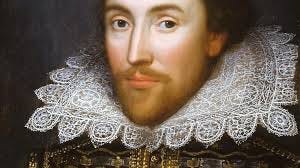
No one, though, has ever accused Hamlet of being ‘sentimental goo’. A study in revenge, it is no tear jerker but a complex interrogation of the motives that propel one man to his demise. In that regard, Hamlet and Hamnet are artistic opposites. Hamnet places at its core Anne Hathaway, Shakespeare’s wife, whose name O’Farrell has changed to Agnes, and her son, Hamnet, who died in childhood. Where, apart from the similarity of the names, Hamnet fits into Hamlet’s story is not clear. What we do know is that the earliest source of the play is to be found in Historica Danica (1514) by the Danish chronicler Saxo Grammaticus (c.1150-c.1220), which, in the 1570s, was translated in Histoires tragiques by Pierre de Belleforest. It has been suggested that Shakespeare made an earlier attempt to turn this into a play around 1590, five or so years after Hamnet’s death. The tragedy we now recognise as Hamlet reached fruition c.1600.
Much ado - aha! - has been made of Hamlet’s title as the Prince of Denmark and of Elsinore, his home town, where - according to a tourist website - “you’ll find Hamlet’s castle, 400-year-old streets, an architectural masterpiece in a former ship dock, design shops and gastronomic experiences.” What you not will find, alas, is any evidence that someone called Shakespeare was ever there. Like Dunsinane Hill and Juliet’s balcony in Verona, Denmark and Elsinore are products of Shakespeare’s fecund imagination. For, as far as one can tell, he never had occasion to use a passport. Any travelling he did was local or in his mind. He was, it seems, an avid reader and could get by in a number of languages - Latin, Greek, French, Italian - and scoured texts and borrowed wantonly to transform into work for the stage. Pressure on him was high, as were expectations. When not writing, he was directing and acting. He was a man under the cosh and chained to a treadmill, hammering out one play after another to satisfy demand. Hamlet may ostensibly be set in Denmark but, as John Dover Wilson acknowledged in What Happens in Hamlet (originally published in 1935 and updated several times thereafter), substitute ‘England’ for ‘Denmark’ and you will have a better understanding of where Shakespeare was coming from.
I say ‘Shakespeare’, which I appreciate does not convince everyone, including Elizabeth Winkler, whose enjoyable essay, ‘Was Shakespeare a Woman?’, first appeared in The Atlantic and was republished in The Best American Essays 2020. As Winkler notes, there have been many candidates proposed as the author of Macbeth, King Lear, A Midsummer Night’s Dream and - drum roll - Hamlet. Some of these are easily dismissed. As Winkler says, “Doubts about whether William Shakespeare…really wrote the works attributed to him are almost as old and as the writing itself.” Others, however, should be taken more seriously. Her chosen candidate to usurp him is one Emilia Bassano who, many moons ago, was plucked from obscurity by the Shakespeare scholar and professional Cornishman A.L. Rowse.
The circumstantial evidence in favour of Ms Bassano is superficially compelling; she was well-educated, well-travelled, well-connected (she knew someone who’d been to Denmark and may have encountered two chaps called Rosencrantz and Guildenstern!), a decent if unremarkable writer and - a clincher! - a woman who had first-hand experience of love’s labour’s lost. Delving deeper down the rabbit hole, Winkler concludes: “What would the revelation of a woman’s hand at work mean, aside from the loss of a prime tourist attraction in Stratford-upon-Avon? Would the effect be a blow to the cultural patriarchy, or the erosion of the canon’s status? Would (male) myths of inexplicable genius take a hit? Would women at last claim their rightful authority as historical and intellectual forces?” Here be so many ‘woulds’ it is nigh impossible to see the trees.